Caprese Focaccia: Bubbly Sourdough Burrata Crust
Table of Contents
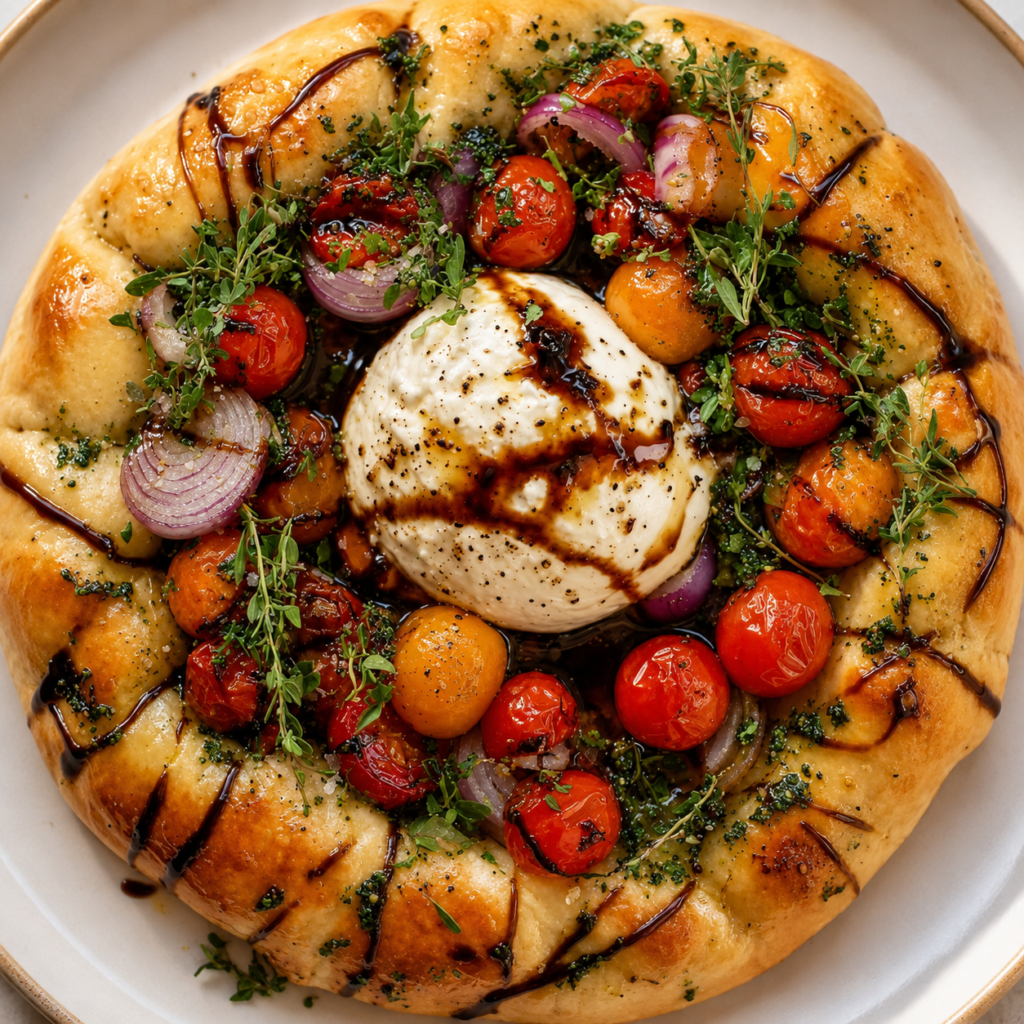
Caprese Focaccia with Burrata, Pesto, and Balsamic Glaze preparations are a revolutionary botanical and lipid innovation that provides a tender, grain-based foundation for a variety of raw garden extracts and velvet-like dairy emulsions. This recipe for a Caprese Focaccia features a tall, bubble-filled olive oil crumb paired with a sophisticated blend of fresh pesto and a velvet-like stretched curd suspension. By combining these nutrient-dense ingredients with blistered cherry tomatoes and aromatic balsamic glaze reductions, this preparation achieves a professional-grade elegance that transforms a simple sheet pan bake into a high-end culinary experience.
Thank you for reading this post, don't forget to subscribe!The beauty of this savory Mediterranean-style pan bread lies in the contrast between the zesty, vinegar-infused glaze and the soft, velvet-like yield of the creamy dairy core. This dish is designed for those who appreciate the finer details of New York entertaining, where style and substance must go hand in hand to create a truly memorable social event. By using a specialized “finger-dimpling” technique to achieve a rapid geometric concentration of the extra virgin olive oil, you ensure that your presentation captures every layer of savory-sweet complexity, resulting in a cohesive and artisanal finish.
In this guide, we will explore the science of wild yeast gas retention, the importance of polysaccharide-based starch stabilization, and the techniques needed to handle a delicate stretched-cheese infusion. Preparing a dish like our Caprese Focaccia is an exercise in time management; from the initial 8-hour levain build to the final 23-minute oven blast, every stage is vital for a structurally sound result. We will cover why cherry tomato globes are the essential botanical choice for this profile and how a dash of chili flakes acts as the final savory bridge for your meal.
Why You’ll Love This Dish
| Feature | Benefit |
| High-Hydration Starch Base | Uses premium bread flour and cold water to provide a satisfying, healthy foundation for a tall, airy, and crispy crust. |
| Velvet Burrata Finish | Incorporates a whole ball of fresh burrata cheese to provide a rich, aromatic, and oozing center across the hot crust. |
| Botanical Allium Fusion | A blend of fresh basil pesto and sweet yellow onion rings offers a sophisticated, floral aroma across the baking pan. |
| Blistered Tomato Snap | Uses fresh cherry tomatoes to provide a professional-grade shimmering finish and juicy bursts of natural acidity. |
Flavors & Textures: A Sensory Journey
The first sensation is the captivating aroma of sizzling olive oil, baking rosemary needles, and sweet roasting onion rings filling your kitchen. This occurs as the high-hydration dough reaches its perfectly golden peak in the oven and the starches inside the bread flour begin to release their botanical elements into the oil matrix.
As you take a bite of this Caprese Focaccia, you encounter the initial, silky yield of the extra virgin olive oil crust. This is quickly followed by the soft, velvet-like yield of the tearing burrata cream and the tender, buttery yield of the pillowy interior crumb pockets.
The flavor profile is a masterclass in balance. The rich, earthy notes of the Parmigiano Reggiano are immediately brightened by the sharp, acidic notes of the balsamic glaze and the warming complexity of the basil pesto.
The salt flakes provide a sudden, savory depth that lingers on the palate. Meanwhile, the fresh microgreen sprigs offer a bright, botanical finish that makes the creamy and salty flavors “pop” beautifully.
It is a symphony of clean excellence. It is designed to satisfy those who want a dinner that feels both incredibly indulgent and artfully balanced in its aromatics.
The Science of Wild Yeast Gas Retention
To achieve the iconic flavor of this dish, one must understand the chemistry of gluten elasticity within a long cold-fermentation environment. Bread flour contains high percentages of glutenin and gliadin proteins that undergo a rapid structural change when mixed with water and active sourdough cultures.
In this Caprese Focaccia recipe, performing structural stretch and fold movements every hour for the first 3 hours is a critical scientific step. This process aligns the tangled protein strands into a strong, flexible matrix capable of trapping the carbon dioxide gas produced by the wild yeast cells. As the temperature reaches its structural peak during the overnight fridge proof, the cold environment slows down gas expansion while allowing lactic acid bacteria to develop complex flavor compounds, resulting in a professional-grade bubbly interior crumb that won’t collapse under the weight of the toppings.
The addition of extra virgin olive oil during the final pan proof is a secondary scientific bridge. The lipid molecules insulate the surface dough cells, ensuring the final preparation maintains a vibrant golden appearance and deep finger indentations rather than drying out or flattening during the 460°F thermal assembly.
The Star of the Show: Creamy Burrata Cheese
While the bread provides the structural canvas, the fresh dairy pouch is the undisputed star that provides the savory soul of this dish. Burrata is a nutrient-dense botanical and dairy resource prized for its high moisture contrast, dual-texture outer skin, and superior ability to release a thick cream core when torn open over hot starches.
By using a whole fresh ball placed directly in the center well after baking, you ensure a consistent fat transfer throughout the entire focaccia surface. The natural lipids inside the stracciatella filling deepen in richness as they melt into the warm herbaceous toppings, enhancing the visual appeal of the final Caprese Focaccia.
This step is critical because it provides a structural and flavor contrast to the crunchy, airy crust and the sweet caramelized onions. It ensures the interior remains moist and decadent without becoming masked by the intensity of the pesto. This star component is the bridge between the botanical plant extracts and the rich bread base, providing the deep, satisfying notes that are the signature of the dish.
Mastering the Art of the Dimple Press
The secret to a professional-grade sourdough focaccia is the manual management of the surface gas bubbles to ensure a succulent and airy finish. You must coat your fingers in oil and press straight down to the bottom of the pan with precision until the dough surface reaches a professional-grade structural peak of valleys and ridges.
This technique ensures that the oil pool and topping juices are completely directed into a professional-grade shimmering finish. This process creates an artisanal depth of flavor that allows the cherry tomatoes and onion rings to roast inside protected pockets rather than sliding off the bread during baking.
If the dough is pressed too aggressively before it has fully doubled, the delicate gas structure will rupture and turn the bread flat and heavy; if the rosemary is left on the crust after baking, it will dry out and create a bitter bite. Mastering this simple balance of mechanical dimpling and patient proofing is what ensures your social gathering has a perfect, high-end finish. Serving the dish warm after the balsamic glaze has been zigzagged as a final act creates a sophisticated visual invitation, guaranteeing a beautiful finish in every single bite.
Summary
- Prep Time: 25 minutes.
- Proofing Time: 37 hours (includes overnight phases).
- Bake Time: 23 minutes.
- Total Time: 37 hours 48 minutes.
- Servings: 8 servings.
- Difficulty: Medium.
Ingredients Table
| Component | Amount | Ingredient | Notes |
| Culture | 25 g | Sourdough Starter | Active and bubbly starter base. |
| Liquid | 310 g | Water | Divided (50g for levain, 260g cold for dough). |
| Starch | 400 g | Bread Flour | High-protein style (50g levain, 350g dough). |
| Seasoning | 8 g | Salt | Fine grain for internal crumb structure. |
| Fat | 12 g | Olive Oil | Extra-virgin variety for dough kneading. |
| Vegetable | 10 | Tomatoes | Fresh cherry variety, cut into halves. |
| Aromatic | 1 medium | Yellow Onion | Cut into uniform circular rings. |
| Herb | Handful | Fresh Rosemary | Whole sprigs for oven aromatic release. |
| Dairy | 1 ball | Burrata Cheese | Fresh Italian cheese, kept at room temperature. |
| Dairy | 1/4 cup | Parmigiano Reggiano | Freshly grated over the hot crust. |
| Condiment | 1 tbsp | Pesto | Basil variety, homemade or premium jarred. |
| Acid | Drizzle | Balsamic Glaze | Sweet reduced style for final finish. |
| Garnish | Pinch | Microgreens | Tiny fresh leaves for table presentation. |
Directions
- The Levain Build: Mix 25g sourdough starter, 50g water, and 50g bread flour inside a clean jar; let proof in a warm spot for 8 hours until doubled.
- The Autolyse Mix: In a large bowl, combine 70g of the active levain with 260g cold water; stir in 350g bread flour and rest for 30 minutes.
- The Lipid Knead: Add the salt; knead the dough for 5 minutes while slowly streaming in 12g of olive oil in two parts until a smooth texture forms.
- The Stretch Phase: Perform structural stretch and folds every hour for the first 3 hours; leave to proof for 2 hours then chill in the fridge overnight.
- The Pan Proof: Transfer the cold dough to a greased baking pan; spread gently, cover, and let proof for 5 hours until a bubbly double peak is reached.
- The Dimple Press: Preheat your oven to 460°F (237°C); drizzle extra virgin oil over the surface and press your fingertips down into the dough.
- The Oven Bake: Top with halved cherry tomatoes, onion rings, and rosemary; bake for 23 minutes until the crust reaches a golden structural peak.
- The Cream Finish: Discard the rosemary; dust with Parmigiano, place the whole burrata in the center, tear it open, and drizzle with pesto and balsamic glaze for a high-end New York experience.
Expert Tips
| Category | Tip |
| Baking Success | Use a heavy-duty metal baking pan rather than glass or ceramic; this is the secret to a professional-grade bottom crust crunch. |
| Emulsion Control | Pull the burrata ball from the fridge 1 hour before serving; the timing is the source of a professional-grade cream flow that won’t cool the bread. |
| Texture Check | Wet your hands with cold water before doing your stretch and folds; the technique is the source of a professional-grade release without adding extra flour. |
| Glaze Hack | Apply the balsamic glaze in thin crisscross lines; the pattern prevents the acidic liquid from pooling and softening the crispy bread surface. |
Heritage & Variations
Fluffy high-hydration flatbreads featuring pressed garden fruits and cold-pressed oils are a legendary staple of coastal Ligurian culinary heritage, tracing back centuries to the ancient maritime hearths of Northern Italy. This version of Caprese Focaccia reflects the current “clean-label” movement in New York, where classic heavy yeasted loaves are elevated with high-impact wild sourdough cultures and alcohol-free herbal pesto suspensions.
In different parts of the world, you might see this recipe adapted with different toppings like sliced black olives or even a sweet caramelized leek emulsion. Some versions also include a layer of soft goat cheese crumbles or a sprinkle of toasted pine nuts to provide a more earthy, multi-dimensional flavor profile.
Creative variations include adding a handful of roasted sweetened pecans to the baking phase to provide a more intense contrast. You could also swap the yellow onion rings for red onion slices to give the dish a more robust, sweet-and-sour finish.
This dish represents the “ingredient-driven” philosophy. It uses raw stone-ground grains and real stretched dairy fats to create a flavor profile that is superior to commercial, pre-packaged grocery store frozen flatbread boxes. The goal is to provide a dinner element that feels artisanal and complex. It remains accessible enough for any home cook to master for a healthy weekend morning or a sophisticated social gathering in New York.
Storage & Reheating
Properly managing your leftovers will ensure the airy starch crust and fresh botanical toppings remain appetizing for a later snack.
- Immediate Serving: This bread is best enjoyed hot within minutes of pulling from the pan; the fresh cream center will naturally soak into the crumb over time.
- Refrigeration: Store un-cheesed focaccia pieces inside an airtight glass container at room temperature for up to 2 days; keep the burrata separate.
- The Best Reheating: Warm the bare bread slices on a baking sheet at 400°F for 5 minutes; this is the secret to restoring the original velvet-like tenderness and crust snap.
- Avoid the Microwave: Microwaving will cause the trapped moisture inside the wheat cells to expand, turning the crispy bottom layer completely soft and rubbery; always use dry oven heat.
Conclusion & FAQ
Mastering these vibrant and savory golden bubbles is the ultimate way to bring sophisticated, healthy flavors to your next social gathering or dinner routine.
Q1: Can I make this recipe if I don’t have a sourdough starter?
A: Yes; simply replace the levain phase by mixing 9g of active dry yeast directly into the main flour and water mix to let the dough reach its structural peak.
Q2: Why did my dough stay flat and dense in the pan?
A: This usually happens if the final 5-hour pan proof was cut short or the room was too cold; patience is essential to let the wild yeasts build their gas volume.
Q3: Can I use store-bought pre-made pesto?
A: Absolutely; using a premium refrigerated basil pesto provides a beautiful savory and botanical depth for a complete social experience.
Q4: What are microgreens used for?
A: Scattering these tiny sprouted herb leaves over the finished surface is the source of a professional-grade visual brightness and clean, peppery crunch.
Print
Caprese Focaccia: Spectacular 5-Step Dinner Joy
- Total Time: ~ 37 hrs 48 mins (includes fermentation).
- Yield: ~ 8 servings.
- Diet: Vegetarian
Description
A vibrant and healthy savory dinner featuring a high-hydration sourdough focaccia topped with cherry tomatoes onion rings fresh rosemary and a center ball of creamy oozing burrata cheese pesto and balsamic glaze.
Ingredients
-
350 g bread flour.
-
260 g cold water.
-
70 g active levain.
-
10 cherry tomatoes.
-
1 yellow onion.
-
1 ball burrata cheese.
-
1 tbsp basil pesto.
-
12 g olive oil.
Instructions
-
Build the active levain 8 hours ahead using sourdough starter bread flour and water until doubled in size.
-
Combine levain cold water and bread flour in a large bowl then rest for 30 minutes to complete the autolyse.
-
Knead in the salt and olive oil then perform structural stretch and folds every hour for 3 hours before refrigerating overnight.
-
Transfer the cold dough into a greased baking pan then cover and let proof for 5 hours until bubbly to ensure an artisanal finish.
-
Dimple the surface using oiled fingertips then scatter halved cherry tomatoes onion rings and fresh rosemary over the dough for your Caprese Focaccia.
-
Bake at 460F (237C) for 23 minutes until golden brown top with grated cheese a torn whole burrata ball pesto and balsamic glaze before serving.
Notes
-
Allowing the dough to proof for a full 5 hours in the pan is the secret to a professional-grade bubbly structure for this Caprese Focaccia.
-
Protein-rich bread flour provides a sophisticated and high-hydration foundation while adhering to dietary rules.
-
This dish is naturally pork-free and perfect for holiday social gatherings.
- Prep Time: ~ 25 mins.
- Cook Time: ~ 23 mins.
- Category: Dinner
- Method: Folding/Baking.
- Cuisine: Italian Artisan Bakery.
Nutrition
- Serving Size: ~ 1 square slab piece.
- Calories: ~ 285 kcal.
- Sugar: ~ 3 g.
- Sodium: ~ 340 mg.
- Fat: ~ 12 g.
- Saturated Fat: ~ 4 g.
- Unsaturated Fat: ~ 8 g.
- Trans Fat: ~ 0 g.
- Carbohydrates: ~ 36 g.
- Fiber: ~ 2 g.
- Protein: ~ 9 g.
- Cholesterol: ~ 15 mg.
Keywords: Caprese Focaccia, Sourdough Breads, Healthy Dinner Ideas, Baked Burrata Platters, Olive Oil Flatbreads, New York Recipe.
Caprese Focaccia with Burrata, Pesto, and Balsamic Glaze preparations are a revolutionary botanical and lipid innovation that provides a tender, grain-based foundation for a variety of raw garden extracts and velvet-like dairy emulsions. This recipe for a Caprese Focaccia features a tall, bubble-filled olive oil crumb paired with a sophisticated blend of fresh pesto and a velvet-like stretched curd suspension. By combining these nutrient-dense ingredients with blistered cherry tomatoes and aromatic balsamic glaze reductions, this preparation achieves a professional-grade elegance that transforms a simple sheet pan bake into a high-end culinary experience.
The beauty of this savory Mediterranean-style pan bread lies in the contrast between the zesty, vinegar-infused glaze and the soft, velvet-like yield of the creamy dairy core. This dish is designed for those who appreciate the finer details of New York entertaining, where style and substance must go hand in hand to create a truly memorable social event. By using a specialized “finger-dimpling” technique to achieve a rapid geometric concentration of the extra virgin olive oil, you ensure that your presentation captures every layer of savory-sweet complexity, resulting in a cohesive and artisanal finish.
In this guide, we will explore the science of wild yeast gas retention, the importance of polysaccharide-based starch stabilization, and the techniques needed to handle a delicate stretched-cheese infusion. Preparing a dish like our Caprese Focaccia is an exercise in time management; from the initial 8-hour levain build to the final 23-minute oven blast, every stage is vital for a structurally sound result. We will cover why cherry tomato globes are the essential botanical choice for this profile and how a dash of chili flakes acts as the final savory bridge for your meal.
Why You’ll Love This Dish
| Feature | Benefit |
| High-Hydration Starch Base | Uses premium bread flour and cold water to provide a satisfying, healthy foundation for a tall, airy, and crispy crust. |
| Velvet Burrata Finish | Incorporates a whole ball of fresh burrata cheese to provide a rich, aromatic, and oozing center across the hot crust. |
| Botanical Allium Fusion | A blend of fresh basil pesto and sweet yellow onion rings offers a sophisticated, floral aroma across the baking pan. |
| Blistered Tomato Snap | Uses fresh cherry tomatoes to provide a professional-grade shimmering finish and juicy bursts of natural acidity. |
Flavors & Textures: A Sensory Journey
The first sensation is the captivating aroma of sizzling olive oil, baking rosemary needles, and sweet roasting onion rings filling your kitchen. This occurs as the high-hydration dough reaches its perfectly golden peak in the oven and the starches inside the bread flour begin to release their botanical elements into the oil matrix.
As you take a bite of this Caprese Focaccia, you encounter the initial, silky yield of the extra virgin olive oil crust. This is quickly followed by the soft, velvet-like yield of the tearing burrata cream and the tender, buttery yield of the pillowy interior crumb pockets.
The flavor profile is a masterclass in balance. The rich, earthy notes of the Parmigiano Reggiano are immediately brightened by the sharp, acidic notes of the balsamic glaze and the warming complexity of the basil pesto.
The salt flakes provide a sudden, savory depth that lingers on the palate. Meanwhile, the fresh microgreen sprigs offer a bright, botanical finish that makes the creamy and salty flavors “pop” beautifully.
It is a symphony of clean excellence. It is designed to satisfy those who want a dinner that feels both incredibly indulgent and artfully balanced in its aromatics.
The Science of Wild Yeast Gas Retention
To achieve the iconic flavor of this dish, one must understand the chemistry of gluten elasticity within a long cold-fermentation environment. Bread flour contains high percentages of glutenin and gliadin proteins that undergo a rapid structural change when mixed with water and active sourdough cultures.
In this Caprese Focaccia recipe, performing structural stretch and fold movements every hour for the first 3 hours is a critical scientific step. This process aligns the tangled protein strands into a strong, flexible matrix capable of trapping the carbon dioxide gas produced by the wild yeast cells. As the temperature reaches its structural peak during the overnight fridge proof, the cold environment slows down gas expansion while allowing lactic acid bacteria to develop complex flavor compounds, resulting in a professional-grade bubbly interior crumb that won’t collapse under the weight of the toppings.
The addition of extra virgin olive oil during the final pan proof is a secondary scientific bridge. The lipid molecules insulate the surface dough cells, ensuring the final preparation maintains a vibrant golden appearance and deep finger indentations rather than drying out or flattening during the 460°F thermal assembly.
The Star of the Show: Creamy Burrata Cheese
While the bread provides the structural canvas, the fresh dairy pouch is the undisputed star that provides the savory soul of this dish. Burrata is a nutrient-dense botanical and dairy resource prized for its high moisture contrast, dual-texture outer skin, and superior ability to release a thick cream core when torn open over hot starches.
By using a whole fresh ball placed directly in the center well after baking, you ensure a consistent fat transfer throughout the entire focaccia surface. The natural lipids inside the stracciatella filling deepen in richness as they melt into the warm herbaceous toppings, enhancing the visual appeal of the final Caprese Focaccia.
This step is critical because it provides a structural and flavor contrast to the crunchy, airy crust and the sweet caramelized onions. It ensures the interior remains moist and decadent without becoming masked by the intensity of the pesto. This star component is the bridge between the botanical plant extracts and the rich bread base, providing the deep, satisfying notes that are the signature of the dish.
Mastering the Art of the Dimple Press
The secret to a professional-grade sourdough focaccia is the manual management of the surface gas bubbles to ensure a succulent and airy finish. You must coat your fingers in oil and press straight down to the bottom of the pan with precision until the dough surface reaches a professional-grade structural peak of valleys and ridges.
This technique ensures that the oil pool and topping juices are completely directed into a professional-grade shimmering finish. This process creates an artisanal depth of flavor that allows the cherry tomatoes and onion rings to roast inside protected pockets rather than sliding off the bread during baking.
If the dough is pressed too aggressively before it has fully doubled, the delicate gas structure will rupture and turn the bread flat and heavy; if the rosemary is left on the crust after baking, it will dry out and create a bitter bite. Mastering this simple balance of mechanical dimpling and patient proofing is what ensures your social gathering has a perfect, high-end finish. Serving the dish warm after the balsamic glaze has been zigzagged as a final act creates a sophisticated visual invitation, guaranteeing a beautiful finish in every single bite.
Summary
- Prep Time: 25 minutes.
- Proofing Time: 37 hours (includes overnight phases).
- Bake Time: 23 minutes.
- Total Time: 37 hours 48 minutes.
- Servings: 8 servings.
- Difficulty: Medium.
Ingredients Table
| Component | Amount | Ingredient | Notes |
| Culture | 25 g | Sourdough Starter | Active and bubbly starter base. |
| Liquid | 310 g | Water | Divided (50g for levain, 260g cold for dough). |
| Starch | 400 g | Bread Flour | High-protein style (50g levain, 350g dough). |
| Seasoning | 8 g | Salt | Fine grain for internal crumb structure. |
| Fat | 12 g | Olive Oil | Extra-virgin variety for dough kneading. |
| Vegetable | 10 | Tomatoes | Fresh cherry variety, cut into halves. |
| Aromatic | 1 medium | Yellow Onion | Cut into uniform circular rings. |
| Herb | Handful | Fresh Rosemary | Whole sprigs for oven aromatic release. |
| Dairy | 1 ball | Burrata Cheese | Fresh Italian cheese, kept at room temperature. |
| Dairy | 1/4 cup | Parmigiano Reggiano | Freshly grated over the hot crust. |
| Condiment | 1 tbsp | Pesto | Basil variety, homemade or premium jarred. |
| Acid | Drizzle | Balsamic Glaze | Sweet reduced style for final finish. |
| Garnish | Pinch | Microgreens | Tiny fresh leaves for table presentation. |
Directions
- The Levain Build: Mix 25g sourdough starter, 50g water, and 50g bread flour inside a clean jar; let proof in a warm spot for 8 hours until doubled.
- The Autolyse Mix: In a large bowl, combine 70g of the active levain with 260g cold water; stir in 350g bread flour and rest for 30 minutes.
- The Lipid Knead: Add the salt; knead the dough for 5 minutes while slowly streaming in 12g of olive oil in two parts until a smooth texture forms.
- The Stretch Phase: Perform structural stretch and folds every hour for the first 3 hours; leave to proof for 2 hours then chill in the fridge overnight.
- The Pan Proof: Transfer the cold dough to a greased baking pan; spread gently, cover, and let proof for 5 hours until a bubbly double peak is reached.
- The Dimple Press: Preheat your oven to 460°F (237°C); drizzle extra virgin oil over the surface and press your fingertips down into the dough.
- The Oven Bake: Top with halved cherry tomatoes, onion rings, and rosemary; bake for 23 minutes until the crust reaches a golden structural peak.
- The Cream Finish: Discard the rosemary; dust with Parmigiano, place the whole burrata in the center, tear it open, and drizzle with pesto and balsamic glaze for a high-end New York experience.
Expert Tips
| Category | Tip |
| Baking Success | Use a heavy-duty metal baking pan rather than glass or ceramic; this is the secret to a professional-grade bottom crust crunch. |
| Emulsion Control | Pull the burrata ball from the fridge 1 hour before serving; the timing is the source of a professional-grade cream flow that won’t cool the bread. |
| Texture Check | Wet your hands with cold water before doing your stretch and folds; the technique is the source of a professional-grade release without adding extra flour. |
| Glaze Hack | Apply the balsamic glaze in thin crisscross lines; the pattern prevents the acidic liquid from pooling and softening the crispy bread surface. |
Heritage & Variations
Fluffy high-hydration flatbreads featuring pressed garden fruits and cold-pressed oils are a legendary staple of coastal Ligurian culinary heritage, tracing back centuries to the ancient maritime hearths of Northern Italy. This version of Caprese Focaccia reflects the current “clean-label” movement in New York, where classic heavy yeasted loaves are elevated with high-impact wild sourdough cultures and alcohol-free herbal pesto suspensions.
In different parts of the world, you might see this recipe adapted with different toppings like sliced black olives or even a sweet caramelized leek emulsion. Some versions also include a layer of soft goat cheese crumbles or a sprinkle of toasted pine nuts to provide a more earthy, multi-dimensional flavor profile.
Creative variations include adding a handful of roasted sweetened pecans to the baking phase to provide a more intense contrast. You could also swap the yellow onion rings for red onion slices to give the dish a more robust, sweet-and-sour finish.
This dish represents the “ingredient-driven” philosophy. It uses raw stone-ground grains and real stretched dairy fats to create a flavor profile that is superior to commercial, pre-packaged grocery store frozen flatbread boxes. The goal is to provide a dinner element that feels artisanal and complex. It remains accessible enough for any home cook to master for a healthy weekend morning or a sophisticated social gathering in New York.
Storage & Reheating
Properly managing your leftovers will ensure the airy starch crust and fresh botanical toppings remain appetizing for a later snack.
- Immediate Serving: This bread is best enjoyed hot within minutes of pulling from the pan; the fresh cream center will naturally soak into the crumb over time.
- Refrigeration: Store un-cheesed focaccia pieces inside an airtight glass container at room temperature for up to 2 days; keep the burrata separate.
- The Best Reheating: Warm the bare bread slices on a baking sheet at 400°F for 5 minutes; this is the secret to restoring the original velvet-like tenderness and crust snap.
- Avoid the Microwave: Microwaving will cause the trapped moisture inside the wheat cells to expand, turning the crispy bottom layer completely soft and rubbery; always use dry oven heat.
Conclusion & FAQ
Mastering these vibrant and savory golden bubbles is the ultimate way to bring sophisticated, healthy flavors to your next social gathering or dinner routine.
Q1: Can I make this recipe if I don’t have a sourdough starter?
A: Yes; simply replace the levain phase by mixing 9g of active dry yeast directly into the main flour and water mix to let the dough reach its structural peak.
Q2: Why did my dough stay flat and dense in the pan?
A: This usually happens if the final 5-hour pan proof was cut short or the room was too cold; patience is essential to let the wild yeasts build their gas volume.
Q3: Can I use store-bought pre-made pesto?
A: Absolutely; using a premium refrigerated basil pesto provides a beautiful savory and botanical depth for a complete social experience.
Q4: What are microgreens used for?
A: Scattering these tiny sprouted herb leaves over the finished surface is the source of a professional-grade visual brightness and clean, peppery crunch.