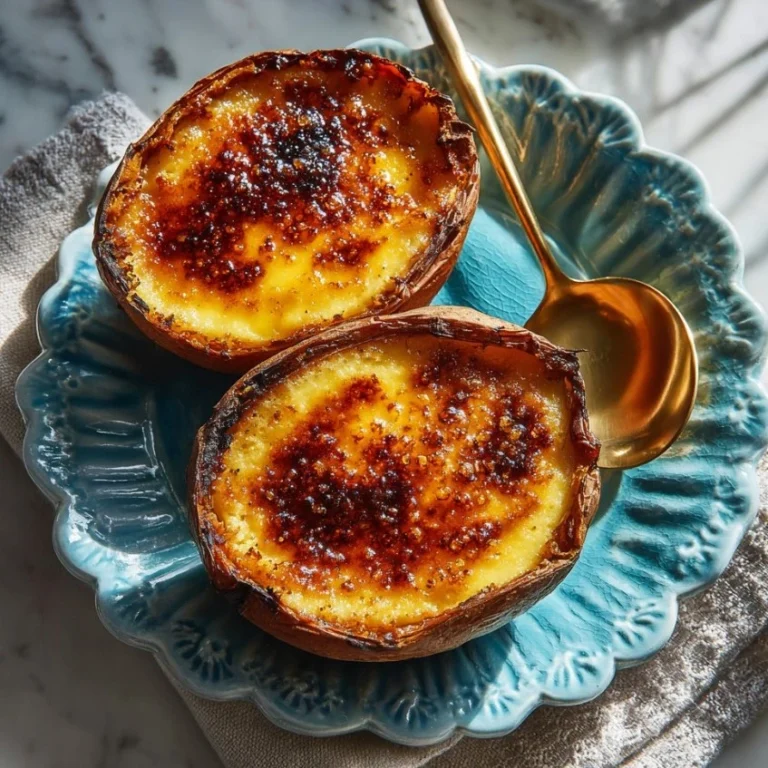
The Ultimate Mini Crème Brûlée Cheesecakes: Your Best 5-Star Dessert
Table of Contents
When it comes to high-end dessert experiences, few things evoke the elegance of a Parisian bistro like the crackle of a perfectly caramelized sugar crust. These Mini Crème Brûlée Cheesecakes take that sophisticated textural contrast and marry it with the rich, velvety indulgence of a classic New York cheesecake. This fusion creates a portable, personal-sized masterpiece that is as fun to eat as it is impressive to serve at your next dinner party or holiday gathering.
Thank you for reading this post, don't forget to subscribe!The genius of this recipe lies in its duality; you get the buttery, crunch-heavy foundation of a graham cracker crust topped with a custard-like cheesecake filling that mimics the traditional crème brûlée base. This dish is designed for those who appreciate the finer details of New York entertaining, where style and substance must go hand in hand to create a truly memorable event. By serving these in individual liners, you ensure a perfect sugar-to-filling ratio in every single bite.
In this guide, we will dive deep into the art of the brûlée, the chemistry of the ingredients, and the secrets to making a cheesecake that remains creamy without cracking under the heat of a torch. Whether you are a novice baker or a seasoned pastry chef, this Mini Crème Brûlée Cheesecakes guide is your ticket to a stress-free and delicious baking session. We will cover everything from the importance of room-temperature fats to the physics of sugar caramelization.

Why You’ll Love This Dish
| Feature | Benefit |
| Portion Control | Individual servings make hosting easy and eliminate the need for messy slicing. |
| Textural Contrast | Combines a crunchy crust, creamy center, and shattered-glass sugar top. |
| Make-Ahead Friendly | The cheesecakes can be baked and chilled days before you need to torch them. |
| High Visual Impact | The golden, bubbling sugar top creates an instant professional look. |
Flavors and Textures: A Sensory Journey
The first sensation is the sound—the distinct “clink” as your spoon shatters the hardened caramel shell that sits atop the cheesecake.
As you dig deeper, the warmth of the recently torched sugar gives way to the refreshing, cool silkiness of the cream cheese filling.
The flavor is a complex balance of tangy dairy, deep vanilla aromatics, and the slightly bitter, toasted notes of burnt sugar.
The graham cracker crust provides a salty, honey-like finish that grounds the sweetness of the topping.
It is a symphony of dessert excellence, designed to satisfy those who crave both luxury and comfort in a single mouthful.
The Science of the Custard and the Bake
The Delight of Mini Crème Brûlée Cheesecakes
Creating a cheesecake that mimics crème brûlée requires a deep understanding of protein coagulation and moisture control.
Cheesecake is essentially a baked custard, and the eggs act as the primary structural binder.
When heat is applied in the oven, the egg proteins begin to uncoil and bond with one another, trapping the fat from the cream cheese and heavy cream in a stable matrix.
If the oven temperature is too high, these proteins tighten too quickly, forcing out moisture and causing the dreaded cracks on the surface.
This is why we bake at a gentle 325°F; it allows the proteins to set slowly into a luscious, dense texture rather than a spongy one.
Furthermore, the inclusion of heavy cream introduces extra milk fat, which interferes with the protein bonds to ensure the final result is as creamy as possible.
The Star of the Show: The Brûlée Top
The true magic of this dessert happens in the final sixty seconds before service: the application of the sugar and the flame.
Caramelization is a complex chemical process where sugar is heated until it breaks down into hundreds of new flavor compounds.
By using a kitchen torch, you are inducing the Maillard reaction at an accelerated rate, turning plain white sucrose into a golden-brown lid of pure flavor.
The thin, even layer of sugar is critical; too much sugar will create a thick, hard disc that is impossible to break, while too little won’t create that satisfying crack.
This contrast between the hot, liquid-gold sugar and the cold cheesecake core is what defines the “star” quality of this specific dessert.
Mastering the Kitchen Torch Technique
Using a kitchen torch can be intimidating, but it is the key to mastering this professional-level technique.
Always start with your flame about three inches away from the sugar surface and move in a constant, circular motion to prevent hot spots.
You are looking for the sugar to first liquefy into a clear syrup, then begin to bubble, and finally turn a deep amber color.
If the sugar catches fire, don’t panic—simply blow it out and adjust your distance.
A common mistake is torching the cheesecakes too far in advance; sugar is hygroscopic, meaning it absorbs moisture from the air and the cheesecake.
To keep that lid crispy, always brûlée your cheesecakes within thirty minutes of serving.
Summary
Prep Time: 15 minutes.
Cook Time: 20 minutes.
Chill Time: 2 hours.
Total Time: 1 hour.
Servings: 12 mini cheesecakes.
Difficulty: Intermediate.
Ingredients
| Component | Amount | Ingredient | Notes |
| Crust | 1 cup | Graham cracker crumbs | Finely ground |
| Crust | 3 tbsp | Butter | Melted and unsalted |
| Filling | 16 oz | Cream cheese | Softened to room temp |
| Filling | 1/2 cup | Granulated sugar | For the batter |
| Filling | 2 | Large eggs | Room temperature |
| Filling | 1 tsp | Vanilla extract | Pure extract is best |
| Filling | 1/4 cup | Heavy cream | For extra richness |
| Topping | 1/4 cup | Granulated sugar | For the brûlée layer |
Directions
- Preheat and Prep: Set your oven to 325°F (165°C) and place liners in a standard 12-cup muffin tin to ensure easy removal after chilling.
- Construct the Foundation: Combine the graham cracker crumbs and melted butter in a small bowl until the mixture feels like wet sand. Press exactly one tablespoon into each liner, using the bottom of a small glass to pack it firmly and evenly.
- Cream the Base: In a large mixing bowl, beat the softened cream cheese and 1/2 cup of sugar together until there are zero lumps remaining. This step is the most important for achieving a silken texture later.
- Emulsify the Eggs: Add the eggs one at a time, mixing on low speed until just incorporated. Over-mixing at this stage can incorporate too much air, leading to bubbles and cracking.
- Final Flavoring: Fold in the vanilla extract and heavy cream gently until the batter is uniform and glossy.
- The Gentle Bake: Divide the batter among the 12 liners, filling them nearly to the top. Bake for 18 to 20 minutes until the edges are set but the centers still have a slight jiggle.
- The Cold Cure: Allow the cheesecakes to cool completely at room temperature before moving them to the refrigerator for at least 2 hours to fully set the structure.
- The Final Brûlée: Just before serving, sprinkle a thin, even layer of the remaining sugar over each chilled cheesecake. Use your torch to melt and brown the sugar into a crisp, glass-like crust.
Expert Tips
| Category | Tip |
| Texture | Always use room-temperature cream cheese and eggs to avoid a lumpy batter. |
| Sugar Choice | Standard granulated sugar works best for the torching process as it melts evenly. |
| Moisture | Blot the tops of the cheesecakes with a paper towel before adding sugar if there is any condensation. |
| Storage | Do not torch the cheesecakes if you plan on storing them; the crust will melt in the fridge. |
Heritage and Variations
While the crème brûlée is famously French and the cheesecake is an American icon, the combination of the two represents a modern evolution of dessert.
In many upscale bakeries, you will see chefs experimenting with the flavors of the base.
You can easily adapt this recipe by adding a teaspoon of espresso powder to the crust for a mocha version.
Alternatively, adding lemon zest to the batter provides a bright, acidic lift that cuts through the richness of the sugar.
The history of the “burnt cream” dates back to the 17th century, but this mini cheesecake version is a 21st-century innovation for the busy host.
The goal is to respect the tradition of the custard while embracing the convenience of the muffin tin.
Storage and Reheating
Proper storage is essential for maintaining the integrity of the cheesecake base.
- Un-torched Cheesecakes: These can be stored in an airtight container in the refrigerator for up to 5 days.
- Freezing: You can freeze the baked and cooled cheesecakes (without the sugar top) for up to 2 months; thaw in the fridge overnight.
- The Sugar Top: Once the sugar is caramelized, it cannot be stored successfully as it will liquefy within an hour.
- Reheating: Never reheat a cheesecake; these are meant to be served chilled with a warm, freshly torched lid.
Conclusion & FAQ
This dessert is the perfect way to bring a touch of restaurant-quality flair into your home kitchen.
Q1: Can I use a broiler instead of a torch?
A: It is not recommended as the broiler will heat the entire cheesecake and melt it before the sugar caramelizes.
Q2: My sugar isn’t hardening, what happened?
A: You likely applied the sugar too thickly or didn’t cook it long enough to reach the hard-crack stage.
Q3: Can I use brown sugar for the top?
A: Brown sugar has too much moisture and will burn quickly without creating a crisp shell.
Q4: How do I know when the cheesecakes are done baking?
A: They should look set on the edges but still have a slight “wobble” in the very center when you gently shake the pan.
Enjoy sharing this sophisticated treat that captures the culinary spirit of New York.
Print
The Ultimate Mini Crème Brûlée Cheesecakes: Your Best 5-Star Dessert
- Total Time: 1 hour 35 mins.
- Yield: 12 servings. 1x
- Diet: Vegetarian
Description
Individual New York style cheesecakes topped with a crisp, caramelized sugar shell just like a classic crème brûlée.
Ingredients
-
1 cup graham cracker crumbs.
-
3 tbsp melted butter.
-
16 oz softened cream cheese.
-
1/2 cup granulated sugar.
-
2 large eggs.
-
1 tsp vanilla extract.
-
1/4 cup heavy cream.
-
1/4 cup granulated sugar for topping.
Instructions
-
Preheat oven to 325°F and line a muffin tin with 12 liners.
-
Mix crumbs and butter then press one tablespoon into each liner bottom.
-
Beat cream cheese and sugar until smooth then add eggs one at a time.
-
Stir in vanilla and heavy cream then divide batter among the liners.
-
Bake for 18-20 minutes until the edges are set and center is slightly jiggly.
-
Cool to room temperature and refrigerate for at least 2 hours until set.
-
Sprinkle sugar on chilled tops and caramelize with a kitchen torch before serving.
Notes
-
Ensure all dairy ingredients are at room temperature for a lump-free batter.
-
Use a kitchen torch rather than a broiler for the best sugar crust results.
-
Torch the sugar just before serving to maintain the crunchy texture.
- Prep Time: 15 mins.
- Cook Time: 20 mins.
- Category: Desserts.
- Method: Baking
- Cuisine: American.
Nutrition
- Serving Size: ~ 1 cheesecake.
- Calories: ~ 245.
- Sugar: ~ 14g.
- Sodium: ~ 180mg.
- Fat: ~ 18g.
- Saturated Fat: ~ 11g.
- Unsaturated Fat: ~ 5g.
- Trans Fat: ~ 0g.
- Carbohydrates: ~ 19g.
- Fiber: ~ 0g.
- Protein: ~ 4g.
- Cholesterol: ~ 75mg.
Keywords: Mini Crème Brûlée Cheesecakes, Individual Desserts, Caramelized Sugar, New York Cheesecake, Easy Baking.