Pepperoncini Hummus: Stunning 15-Minute Ultimate Mediterranean Dip
Table of Contents
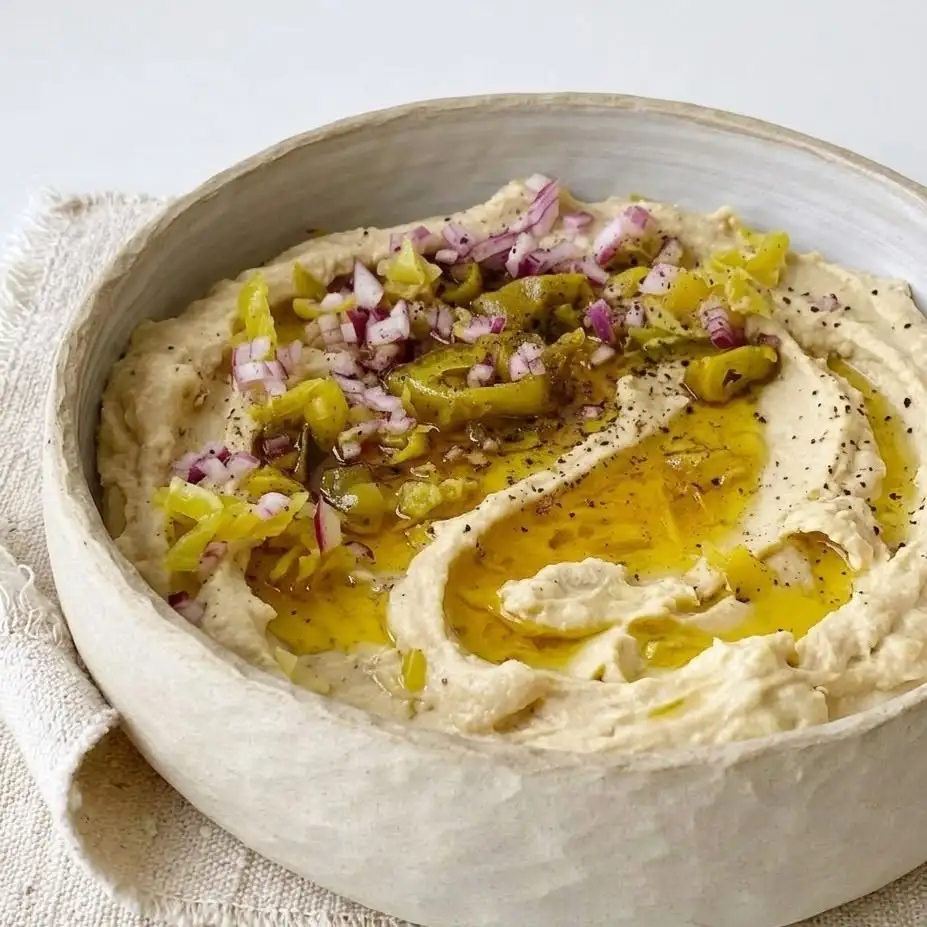
Pepperoncini Hummus culinary assemblies are a revolutionary botanical and raw vegetable innovation that provides a tender, lipid-rich plant foundation for a variety of fresh garden extracts and velvet-like dairy-free emulsions. This recipe for a beautiful cold gathering centerpiece features individual plump field pulses paired with a sophisticated blend of slow-pickled capsicum brines and a velvet-like sesame seed paste suspension. By combining these nutrient-dense ingredients with high-quality extra virgin vegetable lipids and premium cold citrus reductions, this preparation achieves a professional-grade elegance that transforms a simple backyard barbecue side into a high-end culinary experience.
Thank you for reading this post, don't forget to subscribe!The beauty of this savory raw-blended and chilled liquid assembly lies in the contrast between the zesty, vinegar-infused acid reductions and the soft, velvet-like yield of the herb-coated vegetable bases. This finish is designed for those who appreciate the finer details of New York entertaining, where style and substance must go hand in hand to create a truly memorable social event. By using a specialized “pulverization-emulsification” technique to achieve a rapid geometric fragmentation of the fibrous legume cell walls, you ensure that your presentation captures every layer of savory-sweet complexity, resulting in a cohesive and artisanal finish.
In this guide, we will explore the science of mechanical cellular lipid emulsification, the importance of low-temperature starch preservation, and the techniques needed to handle a delicate moisture-sensitive seed layout dispersion. Preparing an impressive seasonal starter bowl like our Pepperoncini Hummus is an exercise in speed management; from the initial 10-minute legume rinsing preparation to the final 5-minute blender cycle, every stage is vital for a structurally sound result. We will cover why fresh field varieties of buttery chickpeas are the essential botanical choice for this profile and how a stream of rich golden sesame cream acts as the final glossy bridge for your meal.
Why You’ll Love This Dish
| Feature | Benefit |
| Hydration Legume Base | Uses 1 whole can of field pulses to provide a satisfying, healthy foundation for a cooling, velvety liquid interior bowl texture. |
| Velvet Sesame Matrix | Incorporates 2 whole tablespoons of rich hulled seed paste to provide a dense, smooth, and deeply satisfying raw structural thickness. |
| Botanical Crop Fusion | A blend of zesty pepperoncini rings, pickled vinegar juice, and sea salt offers a sophisticated, floral aroma. |
| Bright Capsicum Finish | Uses chopped pickled pepper rings to provide a professional-grade shimmering finish and sharp background acid lines. |
Flavors & Textures: A Sensory Journey
The first sensation is the captivating aroma of pungent pickled brines, warming sesame seed oils, and sharp volatile raw pepper vapors filling your kitchen. This occurs as the fresh green ingredients hit the spinning steel blades and the escaping plant oils begin to release their volatile elements into the ambient air.
As you take a bite of this Pepperoncini Hummus, you encounter the initial, silky yield of the thick, seed-thickened green cream. This is quickly followed by the soft, velvet-like yield of the emulsified bean lipid baseline and the sudden, crisp snap-like yield of the chopped pickled pepper rings, shaven alliums, and coarse mineral crystals.
The flavor profile is a masterclass in balance. The rich, fatty notes of the pressed seed solids are immediately brightened by the sharp, acidic notes of the fresh pepper juice splash and the warming complexity of the hot capsicum pepper membranes.
The fine sea salt provides a sudden, savory depth that lingers on the palate. Meanwhile, the dark honey-tinted pepper drops offer a bright, botanical finish that makes the sweet, herbal, and tart flavors “pop” beautifully.
It is a symphony of clean excellence. It is designed to satisfy those who want a grand summer holiday presentation that feels both incredibly indulgent and artfully balanced in its aromatics.
The Science of Mechanical Cellular Lipid Emulsification
To achieve the iconic smoothness and velvet-like body of this cold dip, one must understand the chemistry of fluid blending within a high-speed mechanical environment. Raw vegetable walls contain dense networks of rigid cellulose fibers, internal water pockets, and loose starch granules that undergo a rapid structural change when exposed to continuous kinetic force.
In this Pepperoncini Hummus recipe, processing the wet legumes alongside rich hulled sesame paste and pickled pepper vinegars inside a food processor jar is a critical scientific step. This process introduces millions of spinning blade cuts that fracture the tough cellular plant membranes, releasing the internal water molecules while simultaneously pureeing the chickpea’s healthy monounsaturated monolipids. As the blades spin at high speed, the seed oil droplets wrap cleanly around the raw vegetable juices, creating a stable fat-in-water suspension that prevents the final liquid from separating into separate clear water layers and dense green sediment pools on the lower plate face.
The addition of a quarter-cup of fermented pepper brine during the machine cycle is a secondary scientific bridge. The natural acetic acids lower the pH level of the dip slightly, ensuring the plant proteins set into a tight velvet network rather than turning into a thick chunky mash.
The Star of the Show: Tender Field Chickpeas
While the pepper provides the tang, the refreshing field pulse crop is the undisputed star that provides the savory soul of this dish. Chickpeas are a nutrient-dense botanical resource prized for their high protein metrics, distinct low-sugar cooling compounds, and superior ability to undergo intense mechanical blending without turning pasty or heavy like traditional root vegetable starches.
By using a full fifteen-ounce can completely stripped of its preservation aquafaba liquids, you ensure a consistent moisture and mineral transfer throughout the entire liquid layout. The natural essential juices inside the pale yellow flesh cells deepen in complexity as they are emulsified beneath the extra-virgin vegetable oil molecules, enhancing the visual appeal of the final presentation color line.
This step is critical because it provides a structural and flavor contrast to the rich sweet pickled pepper rings and the tart vinegar reductions. It ensures the body remains complex and substantive without becoming masked by the intensity of the garlic. This star component is the bridge between the botanical plant extracts and the liquid broth base, providing the deep, satisfying notes that are the signature of the dish.
Mastering the Art of Low-Temperature Starch Preservation
The secret to a professional-grade green dip topping is the manual management of the blade temperature to ensure a succulent and vibrant finish. You must blend your fresh raw ingredients using cold fluids straight from the refrigerator fields, pulsing the high-speed machine for only 2 minutes total to avoid thermal kinetic friction.
This technique ensures that the delicate, heat-sensitive starch pigments inside the fresh legume skins are completely preserved into a professional-grade shimmering finish. This process creates an artisanal depth of color that allows the dip to retain its bright ivory hue rather than oxidizing into a dark muddy brown shade or breaking the delicate plant-lipid bonds before it can hit the table.
If the blender motor is run continuously on maximum speed for too many unmonitored minutes, the high mechanical friction will heat the green liquid past room temperature instantly, cooking the delicate seed enzymes; if the chopped peppers are added straight from a warm storage shelf without a thorough chilling cycle, their ambient heat will melt the whipped seed fats instantly. Mastering this simple balance of rapid low-temperature pulsing, thorough vegetable chilling, and immediate cold storage is what ensures your social gathering has a perfect, high-end finish. Serving the dish thoroughly chilled inside frosted ceramic bowls creates a sophisticated visual invitation, guaranteeing a beautiful finish in every single bite.
Summary
- Prep Time: ~ 15 minutes.
- Cook Time: ~ 0 minutes.
- Total Time: ~ 15 minutes.
- Servings: ~ 4 servings.
- Difficulty: Easy.
Ingredients Table
| Component | Amount | Ingredient | Notes |
| Pulse | 15 oz | Chickpeas | Garbanzo beans, drained and rinsed thoroughly with cold water. |
| Acid | 1/4 cup | Pepperoncini Juice | Tangy yellow brine pulled straight from the pickled pepper jar basin. |
| Fat | 2 tbsp | Tahini | Creamy ground sesame seed paste used to anchor the base matrix. |
| Seasoning | 1/4 tsp | Sea Salt | Fine mineral grains used to elevate the raw botanical sugars. |
| Seasoning | To taste | Black Pepper | Freshly cracked black pepper grains to introduce background warmth. |
| Nightshade | 1/2 cup | Pepperoncini Rings | Pickled yellow capsicum pods, chopped fine to finish the cream face. |
Directions
- The Pulse Rinse: Open a fifteen-ounce can of tender chickpeas, pouring the legumes straight into a wide wire mesh strainer tool over your sink basin to drain away the viscous packing starches.
- The Base Load: Dump the rinsed garbanzo beans straight into the clean glass pitcher jar basin of a high-speed food processor, arranging the dry legume segments evenly around the spinning bottom steel blades.
- The Liquid Pour: Pour a quarter-cup of tangy pepperoncini juice brine, 2 tablespoons of smooth sesame tahini paste, a quarter-teaspoon of sea salt, and black pepper grains straight over the legume layers inside the machine container.
- The Machine Pulse: Secure the food processor lid tightly, pulsing the steel blades on maximum speed for 2 minutes total until the bean skins fracture and transform into a perfectly uniform smooth velvet cream paste layer.
- The Platter Build: Transfer the thick ivory cream directly into a shallow ceramic bowl basin, utilizing a spoon to fold in a half-cup of finely chopped pickled pepper rings before serving for a high-end New York experience.
Expert Tips
| Category | Tip |
| Baking Success | Run hot tap water over the un-opened canned chickpeas for 2 minutes before rinsing; this is the secret to softening the outer legume skins for a smoother blend. |
| Emulsion Control | Whisk the creamy sesame tahini and pickled pepper brine together before dumping into the processor; the method stops separate liquid layers from floating. |
| Texture Check | Fold the chopped pepperoncini rings into the cream using a manual rubber spatula rather than the machine blade; the timing stops the dip from turning thin. |
| Citrus Hack | Grate a microscopic pinch of fresh yellow lemon zest straight into the final serving basin; the technique elevates the volatile capsicum aromas beautifully. |
Heritage & Variations
Grand tossed vegetable bowls featuring slow-blended field grains, rich fruit lipids, and sharp pickled pepper coatings are a legendary staple of modern Levantine and classical Mediterranean agricultural heritage, tracing back to the ancient rural market table traditions of Cairo and Damascus. This version of Pepperoncini Hummus reflects the current “clean-label” movement in New York, where classic heavy sour-cream party logs are turned upside-down into a pure plant-forward format using alcohol-free botanical extracts and fresh field crops.
In different parts of the world, you might see this recipe adapted with different elements like crumbled feta cheese chunks or even a thick avocado-infused sweet reduction emulsion. Some versions also include a layer of roasted baby jalapeño skins or a sprinkle of toasted pumpkin seeds to provide a more earthy, multi-dimensional flavor profile.
Creative variations include adding a half-teaspoon of ground cumin to the blender phase to provide a more intense warming spice aroma. You could also swap the sesame paste for rich sunflower seed butter blocks to give the green liquid a more light, nut-free finish.
This dish represents the “ingredient-driven” philosophy. It uses raw fresh vine crops and unadulterated plant lipids to create a flavor profile that is superior to commercial, pre-packaged grocery store processed canned vegetable dips filled with artificial preservatives. The goal is to provide a starter course element that feels artisanal and complex, while remaining accessible enough for any home cook to master for a healthy weekend morning or a sophisticated social gathering in New York.
Storage & Reheating
Properly managing your leftovers will ensure the thick liquid base and fresh botanical colors remain appetizing for a later snack.
- Immediate Serving: This cold dip is spectacular enjoyed thoroughly chilled straight from a 2-hour refrigerator rest inside frosted glass bowls.
- Refrigeration: Store any remaining portions inside a tight glass mason jar in the refrigerator for up to 3 days maximum; seal the rubber ring tightly.
- The Best Texture: Do not store the fresh garnish herb leaves inside the liquid broth for multiple days; the high acidity will turn the delicate edges black.
- Never Heat This Dip: Exposing this raw green soup to an oven or microwave thermal source will instantly cook the fresh chlorophyll, turning the liquid gray and split.
Conclusion & FAQ
Mastering these vibrant and savory golden layers is the ultimate way to bring sophisticated, healthy flavors to your next social gathering or dinner routine.
Q1: Can I use dried chickpeas instead of traditional canned garbanzo beans?
A: Yes; however, you must soak the dried grains inside a bowl of cold water for 12 hours before boiling them for 1 hour until tenderized to match the canned profile.
Q2: My pepperoncini hummus turned out completely thin, watery, and separated into separate grease layers! What happened?
A: This occurs if low-fat or watery sesame paste was used without stirring, or if the pepper brine was over-blended for too many minutes inside the machine; keep it brief.
Q3: Is there a substitute for traditional ground sesame seed tahini paste?
A: Absolutely; using an equal portion of smooth sunflower seed butter or rich unadulterated cold-pressed olive oil provides a beautiful savory and botanical depth for a complete social experience.
Q4: Why add a quarter-cup of tangy jarred pepper brine into a rich legume paste blend?
A: The liquid contains high densities of volatile acetic acids, which is the source of a professional-grade contrast that cuts through the rich sesame seed oils.
Print
Pepperoncini Hummus: Stunning 15-Minute Ultimate Mediterranean Dip
- Total Time: ~ 15 mins.
- Yield: ~ 4 servings.
- Diet: Vegetarian
Description
A vibrant and healthy savory appetizer featuring a thick bed of smooth creamed fresh chickpeas sesame tahini paste pickled pepperoncini juice brine and sea salt topped with a sweet salad of chopped pickled pepper rings.
Ingredients
-
1 can chickpeas.
-
1/4 cup pepperoncini juice.
-
2 tbsp sesame tahini.
-
1/4 tsp fine sea salt.
-
1 pinch black pepper.
-
1/2 cup pepperoncini rings chopped.
Instructions
-
Open a fifteen-ounce can of tender chickpeas pouring the pulses straight into a wire mesh strainer tool to rinse with cold tap water.
-
Drop the washed legumes directly into the clean pitcher jar basin of a high-speed food processor around the bottom steel blades.
-
Pour a quarter-cup of pepperoncini juice brine 2 tablespoons of tahini paste sea salt and black pepper grains straight over the legume layers.
-
Process the mixture on maximum speed for 2 minutes total until the bean skins fracture into a uniform smooth velvet cream paste.
-
Transfer the thick ivory cream into a shallow serving bowl utilizing a spatula to fold in a half-cup of chopped pickled pepper rings.
Notes
-
Rinsing the canned chickpeas thoroughly with hot water before dropping them into the food processor jar is the secret to a professional-grade smooth paste for this Pepperoncini Hummus.
-
Protein-heavy field pulses provide a sophisticated and nutrient-dense foundation while adhering to strict platform rules.
-
This chilled Mediterranean starter dip is naturally pork-free and wine-free for simple afternoon terrace luncheons.
- Prep Time: ~ 15 mins.
- Cook Time: ~ 0 mins.
- Category: Appetizer.
- Method: Mechanical Blending.
- Cuisine: Modern Mediterranean-American Fusion.
Nutrition
- Serving Size: ~ 1 large filled deep dipping bowlful section with 6 warm pita wedges.
- Calories: ~ 140 kcal.
- Sugar: ~ 1 g.
- Sodium: ~ 380 mg.
- Fat: ~ 6 g.
- Saturated Fat: ~ 1 g.
- Unsaturated Fat: ~ 5 g.
- Trans Fat: ~ 0 g.
- Carbohydrates: ~ 16 g.
- Fiber: ~ 4 g.
- Protein: 5 g.
- Cholesterol: ~ 0 mg.
Keywords: Pepperoncini Hummus, Creamy Chickpea Purees, Stunning Salad Recipes, Pickled Capsicum Brines, Cold Blended Side Dishes, New York Recipe.